

NIOS admission is open for Stream 1 Block 1 for April 2027 examination.
Block 1 admission will be closed on 15th September 2026 with late fees.
You can apply online for Class 10 and 12 through the www.nios.ac.in
Whether you are a failed student, school dropout, A working professional, or any other category, you can apply for online admission.
In this post, I’ll explain about NIOS admission, eligibility, fees, subject list, and the step-by-step admission guide.
Disclaimer:
We share information on this website based on our personal experience and research. As an Authorized CSC Facilitation Centre (CSC ID: 325656170012), we try our best to provide correct details. However, there may be mistakes or updates we might not be aware of. For the most accurate and latest information, please visit the NIOS official website www.nios.ac.in
NIOS admission 2026 overview
| Type | Details |
| Admission Mode | Online |
| Course | Class 10 & 12 |
| Board | National Institute of open schooling |
| Block 1 Last Date with fine | 15th September 2026 |
| Block 2 admission starting | from 16 September 2026 (as per the prospectus) |
| NIOS Admission Portal | https://sdmis.nios.ac.in |
What is NIOS Board?
NIOS stands for the National Institute of Open Schooling. It is an autonomous institution under the Government of India.
It is one of the most popular open schooling boards in the world, providing distance education for students who couldn’t complete formal schooling.
How to Apply for NIOS Admission Online
Step 1- Visit the official SDMIS portal
Open the NIOS website and go to the admission menu
Step 2- Select session
Select your NIOS admission session stream 1 or stream 2
Step 3- Choose course and identity type
Select your course Secondary or Senior Secondary and select your type of identity.
Step 4- Fill your personal details
Enter your name, father and mother name, date of birth, email and mobile number.
Step 4-Address
Enter your correspondence and permanent address, if both addresses are same write the same details in both part.
Step 5- Optional details
Provide your optional details such as mother tongue, religion, caste.
Step 6-Select the subjects
Select your subjects as per your choice, minimum 5 and maximum 7 for certification, don’t select more than 2 language subjects.
Step 7- Choose a study centre
Select your study centre, where you want to attend PCP classes and practical examination.
Step 8-Upload documents
Upload your required documents such as, Aadhaar card, passport size photo, signature, last qualification details etc.
Step 9- Review details
Verify your filled admission form carefully.
Step 10- Pay your fee.
If you have verified all your details, then move to payment gateway and pay your NIOS admission fees.
NIOS Admission last Date (Block 1 & Block 2)
NIOS conducts admissions in various blocks every year:
| Admission Block | Without Late Fee | With Late Fee | Public Examination |
|---|---|---|---|
| Stream 1 Block 1 | 16 March – 31 July | 1 August – 15 September (Late fee applicable as per prospectus) | March/April |
| Stream 1 Block 2 | 16 September – 31 January | 1 February – 15 March (Late fee applicable as per prospectus) | October/November |
NIOS Admission Fees structure
Secondary
| General Category | Male | Female | SC/ST, Ex-Service Men/Handicapped |
|---|---|---|---|
| For five subjects | 2340 | 1890 | 1560 |
| For an extra Subject | 940 | 940 | 940 |
Senior Secondary
| General Category | Male | Female | SC/ST, Ex-Service Men/Handicapped |
|---|---|---|---|
| For five subjects | 2600 | 2150 | 1690 |
| For an extra Subject | 940 | 940 | 940 |
Required Documents
| Documents | Class 10 | Class 12 |
|---|---|---|
| Date of Birth Proof | Birth certificate, Addhaar card | Class 10 marksheet, certificate, Admit card |
| Address proof | Aadhar card, voter card, ration card etc | Aadhar card, voter card, ration card etc |
| Photo | Passport size colour photo | Passport size colour photo |
| Last qualification | Last qualification or self-certificate | Class 10 pass marksheet or certificate |
| Signature | Required | required |
| Caste certificate | If required | If required |
Who Should apply for open schooling Admission & Who Should Avoid It
Choosing open schooling is a good decision. Many students apply without understanding whether it actually suits their future goals.
Before applying, you must clearly know whether open schooling is right for you.
1. Failed Board Students
If you failed in board exam, NIOS is the best way to continue education without wasting a year.
Instead of repeating the same school class, you can:
- Transfer passing subjects (TOC)
- Study only failed subjects
- Appear earlier than the next academic year
Read more public exam vs On demand exam which one to choose?
2. School Dropouts
Students who left studies due to:
- financial problems
- family responsibilities
- health issues
- relocation
Can restart education at any age.
3. Working Students
Many students work in shops, delivery jobs, family businesses, or part-time employment.
Regular schooling attendance becomes impossible.
NIOS allows:
- self-study at home
- flexible exam attempts
- choice of exam month
You can earn and study together.
4. Competitive Exam Aspirants
Students preparing for:
- Police
- Railway
- SSC
- Army
- Government jobs
Often, need only a valid Class 10 or 12 certificate.
NIOS certification is accepted in most recruitment exams across India.
5. Sports & Skill-Based Students
Athletes, dancers, musicians, YouTubers, or vocational learners can complete schooling without disturbing practice schedules.
6. Other category
candidate from any category such as housewife, retired person or any other group can apply for NIOS open schooling.
Who should avoid open schooling
Distance learning is flexible — but not for everyone.
Avoid open schooling if:
- You want regular classes
- You need school environment motivation
You depend completely on teachers for your studies
Additional feature of NIOS
TOC
TOC stands for transfer of credit, where you can transfer your passed subjects’ marks from the previous board to NIOS.
You can check the full guide in our detailed NIOS TOC post.
On-Demand exam system On-Demand examination is one of the unique features of NIOS. Here you can apply for the ODES examination from January-March and June-September.
Check the detailed guide about the On-Demand examination.
Eligibility Criteria
For Class 10 (Secondary Course)
- Minimum age: 14 years
- Class 8 certificate or self-certificate.
Read full details NIOS Class 10 Admission
For Class 12 (Senior Secondary Course)
- Minimum age: 15 years
- Must have passed Class 10 from a recognized board
NIOS Admission Streams
NIOS offers admission through different streams
Stream 1 – Fresh Admission (Block I & Block II)
Who can apply?
- Students seeking fresh admission to Class 10 or Class 12.
- Learners who meet the minimum age and educational eligibility prescribed by NIOS.
Features
- Available in Block I and Block II.
- Eligible to appear in the March/April or October/November public examinations, depending on the admission block.
- Suitable for first-time learners and school dropouts.
Stream 2 – Admission for Failed Candidates
Who can apply?
- Students who have failed in Class 10 or Class 12 from a recognized education board and want to join open schooling.
Features
- Designed specifically for unsuccessful candidates.
- Eligible students may also apply for Transfer of Credit (TOC).
- Helps learners avoid repeating all subjects from the beginning.
| Stream | Applicable For | Best For | Examination |
|---|---|---|---|
| Stream 1 | Fresh admission (Class 10 & 12) | New learners and school dropouts | Public Examination |
| Stream 2 | Students who failed in a recognized board | Failed candidates | Stream 2 |
Note: Admission streams, eligibility criteria, and examination schedules are governed by NIOS. Always refer to the official website.
Best Subjects combination
- Science (Physics, Chemistry, Math, Biology)
- Commerce (Accountancy, Business Studies, Economics)
- Arts (History, Political Science, Sociology, Psychology)
- Vocational subjects
- Skill-based programs
You must choose for certification:
- Minimum 5 subjects
- Maximum 7 subjects
- At least one language (not more than two)
For the complete subject list with codes:
NIOS Subjects List – Detailed Guide
What to Do After NIOS Admission?
Once your NIOS online admission is confirmed, there are several important steps you should complete before appearing for your examinations.
Check Admission Status
After submitting your application, regularly check your admission status to verify whether your application has been accepted or if any corrections are required.
Learn How to Check NIOS Admission Status 2026
Create APAAR ID
Create your Apaar account using your Aadhaar card.
Download Your NIOS ID Card
After your admission is confirmed, download your Identity Card.
Learn how to download your NIOS ID Card
Submit Tutor Marked Assignments (TMA)
TMA are an important part of evaluation process.
Failure to submit TMA may affect your final result in subjects where TMA is applicable.
Learn NIOS TMA 2026: Last Date, Marks & Submission Process
Attend Personal Contact Programme (PCP)
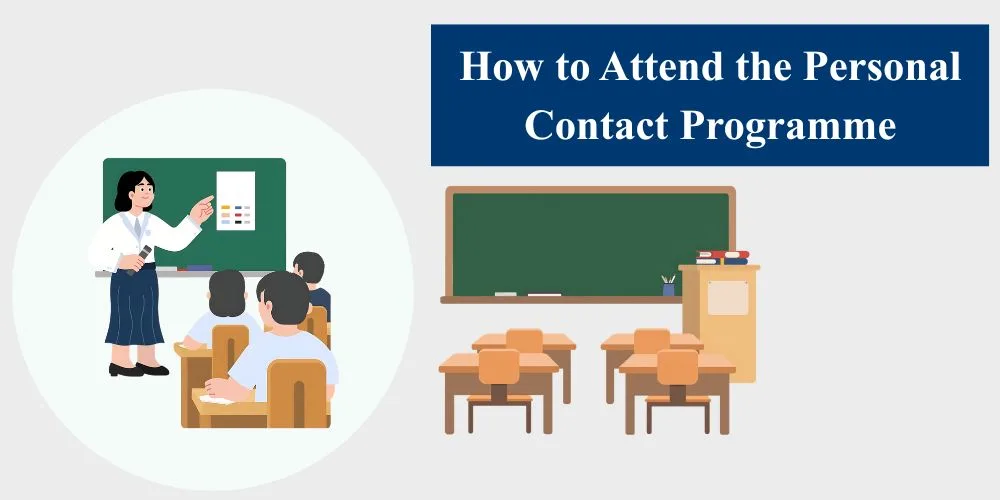
Personal Contact Programmes (PCPs) are face to face classroom sessions conducted at NIOS study centres.
PCP classes help students:
- Understand difficult topics.
- Interact with subject teachers.
- Prepare for practical and theory examinations.
- Resolve academic doubts.
Attendance at PCP is strongly recommended, especially for subjects with practical components.
Prepare for Practical Examinations
Students who have selected practical subjects must appear for practical examinations in addition to theory papers.
Important points:
- Practical exam dates are announced separately.
- Carry your ID card and admit card.
- Reach the examination centre on time.
- Practical marks are included in the final result.
Pay Examination Fees Before the Deadline
Admission alone does not register you for the public examination.
Students must:
- Fill the examination form.
Learn more about NIOS exam fees
Is NIOS Valid for Government Jobs & Higher Education?
Yes.
The National Institute of Open Schooling certificate is:
- Recognized by the Government of India
- Accepted by universities
- Valid for NEET, JEE, and many more
- Valid for SSC, Railway, and State Government jobs
Challenges & Solutions for Open Schooling Students
While the National Institute of Open Schooling offers various benefits, students may face challenges like:
Time Management Issues–With no regular classes, self-discipline is key.
Solution: Create a study schedule and follow it.
Limited Awareness–Some employers and institutions may not be familiar with open schooling.
Solution: Awareness is increasing, and NIOS certificates are recognized nationwide.
Delayed Study Material–Some students receive their textbooks late.
Solution: Download study materials from the official website.
Difference between NIOS, CBSE and IGNOU
Here is the clear difference:
| Feature | NIOS | CBSE | IGNOU |
|---|---|---|---|
| Course | Open School (10th & 12th | School | College / Degree |
| Attendance | Not required | Mandatory | Not required |
| Age Limit | No upper limit | Age restricted | No limit |
| Exam Attempts | Flexible | Once yearly | Semester based |
| Mode of exam | Offline | Offline | Online/offline |
| Best For | Dropouts / failed students | Regular students | Graduation after 12th |
The CBSE is regular school-based, while NIOS offers flexibility open schooling, and IGNOU is an open university.
Note: If you have not completed Class 12, choose NIOS, and if you already passed 12th, choose IGNOU.
Success story
Failed Student
Sneha Sharma, a student, failed in CBSE Class 12 in 2 subjects.
Through NIOS Stream 2, she appeared only in those subjects and passed within 6 months instead of repeating a full year.
Working Adult
Srijani Das, a 40-year-old, applied for NIOS admission for class 12 to fulfill her dream course Diploma in Pharmacy.
Because of age restrictions, regular schools refused her registration. She applied for NIOS registration with science subjects and passed her exams.
Today, she is pursuing her dream of becoming a pharmacist.
Working Student
Surya Prasad, a student who left studies after Class 9 due to financial issues, completed Class 10 and 12 via NIOS and later joined IGNOU university.
These are very common situations where NIOS becomes life-changing.
Pros & Cons of NIOS open schooling
Advantages
✔ Flexible learning
✔ No upper age limit
✔ Affordable
✔ Recognized certificate
✔ Ideal for working students
Limitations
Requires self-discipline
Limited awareness in rural areas
No regular classes
Part Admission
Students who have already passed class 12 from a recognized board cannot take more than 4 subjects. You can select a minimum of 1 and a maximum of 4 subjects.
You can apply as a part admission, and you are not eligible for certification, because you have already passed and certified on a previous board.
Common Mistakes Students Make
Most common admission mistakes
Sometimes we have seen students who have taken fresh admission and opted for transfer of credit (TOC).
They usually forget to send the original failed marksheet, or they don’t know how to send or where to send it.
So they face difficulty while updating the TOC mark, so whenever you face difficulty, you can directly contact your regional centre or NIOS helpline number to get free guidance.
Reasons the application gets rejected.
If you are applying for admission with fake documents, your admission form can be rejected, so before taking the admission, make sure you have uploaded genuine documents.
Missing TMA submission
Students lose 20 marks easily.
Not attending PCP class. Missing 50% of practical marks
FAQ about NIOS Admission 2026
Conclusion
The National Institute of Open Schooling offers a flexible and affordable education option for students from all backgrounds.
Whether you’re a working person or a school dropout, you can easily apply for NIOS admission 10 & 12, as the course fees are very low compared to other private schools.
If you choose the correct stream, subjects, and apply before the deadline, you can complete your Class 10 or 12 without losing another academic year.
Before applying, make sure to:
- Check eligibility
- Confirm dates
- Verify fees
- Keep documents ready
For detailed information on each topic, explore the linked guides above to understand every step clearly.
Ansari Sir is an experienced education professional with over 20 years of expertise in distance and open education systems. He holds a Post-Graduation in Distance Education and has helped thousands of students. He is also an Empaneled Career Counsellor with the National Career Service (NCS), Government of India, and provides trusted, experience-based guidance for students.
Hey Niraj,
Very Nice Artical. This Artical may be very Use our online examination perpouse. I have conducted various types of examination. conduct an online test with our high security.
our service fills you so easy and user-friendly experience to conduct an online test.
Truly amazing Institute. Very Detail information is written by you. Great work.
Very Nice Article. This Article may be very Use our online examination purposes.
Hi,
I want to take Admission in class 1o online .please help.
thanks for sharing this information..have shared this link with others keep posting such information..
First of all thanks for sharing this post, great and helpful info!
Way cool! Some very valid points! I appreciate you writing this article and also the rest of the website is also really good.